Originally from the Democratic Republic of Congo, Eric Semutungwa was forced to flee his home with his family in 2008 due to ongoing conflict. After years of separation, he reunited with his siblings in Nairobi, Kenya, in 2014, where he completed his secondary education. Like many refugees, financial constraints made higher education feel out of reach until he was admitted to SNHU GEM and began pursuing a bachelor’s degree in business management.
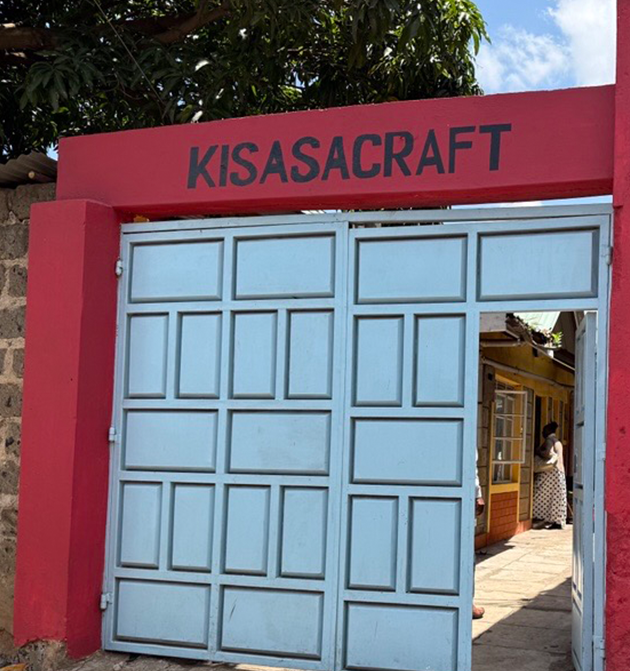
Eric was determined to create a different future. In 2022, alongside a group of peers, he co-founded Kisasa Craft, a community-based organization designed to address one of the most pressing challenges facing refugees: access to stable and meaningful livelihoods. What began as a small initiative has grown into an enterprise that produces handcrafted beaded shoes and handbags for retail and wholesale markets.
Today, Kisasa Craft employs more than 30 refugees, primarily women, and has trained more than 100 refugees and vulnerable members of the host community in entrepreneurship and digital marketing skills.
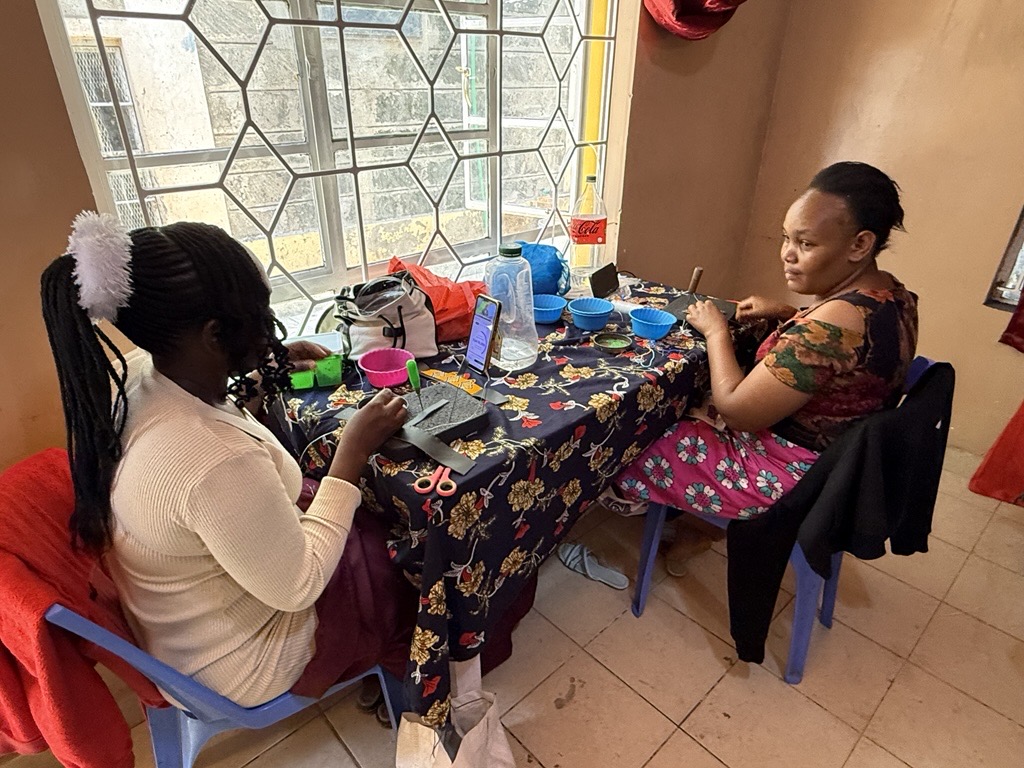
“Our vision is to create a world where refugee persons are equipped with the necessary skills to be self-reliant,” Eric said.
Kisasa Craft was built not only to generate income, but to also restore dignity and opportunity. Many refugees, Eric explained, are limited to informal, low-paying work with little stability or long-term growth. At the same time, valuable craftsmanship skills risk being lost without platforms to sustain them. Kisasa Craft responds to both challenges by creating pathways to income while preserving cultural heritage.
In 2023, Eric received a scholarship to pursue his Business Management degree through SNHU GEM, an opportunity he describes as life-changing.
“My journey with GEM and SNHU has been transformative, equipping me with practical knowledge and a new way of thinking,” he said.
Through coursework in business management, marketing, operations, and organizational behavior, Eric gained practical tools to help structure and grow Kisasa Craft. He now applies financial planning and resource allocation strategies to manage production, design training programs, and support the organization’s long-term sustainability.
“These skills have helped transform Kisasa Craft from an idea into a structured and growing initiative that delivers both social and economic impact,” he said.
Eric has also applied marketing concepts such as audience targeting and digital engagement to expand Kisasa Craft’s online presence, increasing market access and creating new income opportunities for artisans and digital marketers.
Beyond technical skills, Eric credits SNHU GEM with changing how he approaches learning itself.
“Before SNHU, education felt like memorizing information. Today, it means thinking critically, solving problems, and continuously adapting,” he said. “As an entrepreneur, this mindset has been essential. It allows me to approach challenges with confidence, seek solutions, and continuously improve both myself and the organization. In an environment with limited resources, this ability to adapt and grow has been key to our progress.”
That mindset is reflected in Kisasa Craft’s model, which connects artisans with trained social media marketers to promote and sell products online. By combining craftsmanship with digital skills, the organization creates opportunities for people with different educational backgrounds and expands access to broader markets.
The impact is visible across the community.
Women involved in Kisasa Craft are gaining financial independence, confidence, and a stronger voice within their households. Participants who once relied on unstable income are now able to support their families and plan for the future. Some have gone on to start their own businesses, extending the impact even further.
“Kisasa Craft has fostered social integration by bringing together refugees and host community members to work, learn, and grow side by side,” Eric said.
For Eric, the connection between education and impact is clear.
“Education has given me more than knowledge. It has given me confidence, direction, and the ability to create impact in my community,” he said. “It has shown me that even in the face of adversity, a different future is possible.”